_English_
Sidebar

en:dokumente:zeitungen:eureka:x-19310224-q2
Source: Der Staats-Anzeiger, 24 February 1931
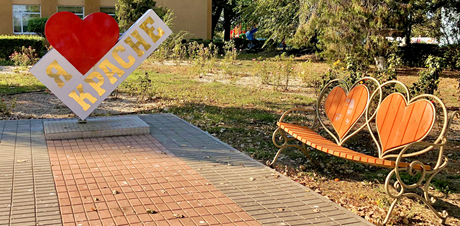
From: Krasna, Bessarabia
19 January 1931
Dear Staats Anzeiger!
The weather here is just the way the farmers like it, moist and warm. As you know, winter grain could not be seeded on time, but nevertheless, it developed fairly well.
However, one is sorry that not more winter wheat was planted. The weather will not stay this way. February will most likely make up for January’s shortfall. Sometimes late planting turns out well with sufficient snow. We hope for the best. Hoping does no harm. There is so much hope that does not come true, so that more or less hope doesn’t matter.
Our farmers had hoped lately, that finally the time had come to obtain cheaper, long-term government loans. For a long time they were promised to receive 3,000 Lei for every Hectar (2.5 acres) of land they owned at 8 percent interest, to be paid off in 20 years. This aide would be sufficient for cautious and calculating individuals to keep their heads above water. Or will this whole matter fall through again?
People who intended to take out such a loan had to make a certain down payment, so called money shares. This money was then forwarded to Bucharest by an authorized representative. Thereafter, everything was supposed to have been quickly taken care of. The representative now has to pursue many ways, writing and telegraphing, and yet the affair still does not happen. Here too, we hope that everything will have a good ending.
Also at this point, hoping a little more or less does not matter. However,
should this hope not come true, then we have to seriously ask ourselves: What next?
Our King has said that the debts have to be paid, which is not more than right.
However, should the people not receive long term, cheap credit, then many, many farms will fall to ruin.
Many plans have been made, and much has been talked and written about how to pull agriculture away from this noose. Until now, however, no one has benefited from it.
We have been advised from many sides to cut back on cultivating grain and switch to raising cattle and fodder production. Livestock in Bessarabia is minimal. There is a very large demand for milk cows, which are relatively well paid for. Steers and heifers also are selling quickly.
Nevertheless, the price for beef is only 20 Lei per kilogram (2 American pounds and 3.5 ounces). A kilogram of sweetened butter costs 60 Lei. The dairies already have announced that they will continue to pay no more than 3 Lei per liter (0.9 quart) of milk. On most farms, cows have not yet calved. Many farmers get their daily milk requirements from the dairies. As soon as the cows give more milk, then of course the price for milk will drop again from 3 to 2 Lei per liter.
What result would bring about the switching from agriculture to ranching one may ask. To alter farming cannot be of help here, but to strengthen farming can. “When the farmer is wealthy, then the whole world is wealthy,” says the proverb. This is as true as the word of the bible. There is no chance for agriculture to be strengthened.
Gasoline, motor oil, kerosene and others are high in price and these prices are still rising, while food and fodder are getting cheaper. Yes, when the farmer has no money, then wheeling and dealing stand still. The vast number of automobiles, buses, tractors and whatever these things are called, take the energy they need no longer from the fruits of the land, which was once the case with the human workforce.
Daily now, millions of Zentners (1 Zentner =100 Kilograms/1 Metric Ton=10 Zentners) less fodder is needed than before. However, far more is produced by the use of these machines. What has to follow is clear. Every team of horses requires a man. One tractor or one truck accomplishes as much as several teams of horses and men. The workers again remain in abundance.
As any other mechanized work requires fewer workers, so the number of unemployed multiplies. It is through such and similar situations how we arrive at overproduction and unemployment. One says, that once you know the cause of an evil, then the elimination of the problem is not that difficult. “Do not rejoice too much in the technical progress, because of it, the world can come to an end,” prophesized a man three years ago. His words seem to have come true.
Recently, Anton Haag died and today was his funeral. Kornelius Koch’s wife is seriously ill.
Many readers of this newspaper miss the reports of Mr. Jakob Ahl and Mr. Johannes Sauter from Russia. They probably left the teaching profession. (*Editor: Mr. Ahl recently contacted us.)
On 19 January, last night a big snowstorm started and is still going on today.
On 20 January, today it is calm again. However, the mail most likely will go out no sooner than tomorrow.
Isidor Leinz
From: Fox Valley, Saskatchewan, Canada
1 February 1931
Dear Staats Anzeiger!
January is behind us. This is usually the coldest month, but not so this year. During the day it is just like spring, warm with sunshine. It is hard to keep the children indoors, because with this weather the little ones want to be outdoors and play. Often it is thawing all night. When there is frost, then the temperature is no more than -3º to -5º Reaumur (about the mid-twenties in Fahrenheit). This kind of weather saves us a lot of coal.
The folks in Krasna should not worry that maybe people here have to starve. We have enough to live on. I do not believe that anyone in Krasna has better bread than we have here.
I could buy for the entire year before hand if I had wanted to. And why? Because here I get paid immediately for my work, while in Krasna I received my pay only after interest payments almost ate up my earnings. That usually happened when working for the municipality. So then what is to be expected from private citizens? Everyone should get his own affairs in order first. Once we all do that, then surely the church will remaining the village.
We were happy about Severin Becker’s story. We send him our regards and hope he will write more often.
We also greet our parents Johannes and Gertruda Leinz along with all siblings and neighbors, including Melchior Speicher, who should get in touch once in a while.
Besides a nice hello, we want to tell our friend, editor assistant E. J. Haag, that now we feel more at home than at the beginning and a 100% better than in Krasna.
Anton A. Söhn
en/dokumente/zeitungen/eureka/x-19310224-q2.txt · Last modified: by Otto Riehl Publisher


